


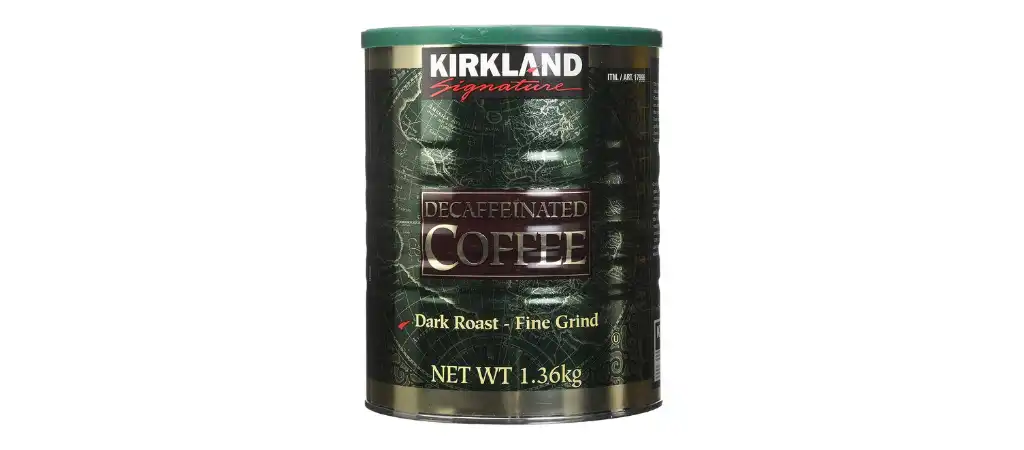
If you drink coffee regularly, caffeine becomes part of your daily rhythm. You learn which cups wake you up properly and which ones barely make a dent. How Much Caffeine In Kirkland Colombian Coffee?
That is why a lot of people eventually start asking the same question about Costco’s popular coffee: how much caffeine is actually in Kirkland Colombian Coffee?
I have brewed a lot of this coffee over the years. Drip machines, French press, cold brew jars sitting in the fridge overnight. One thing I can tell you immediately is that the caffeine number people quote online rarely tells the whole story. The Kirkland Colombian Coffee caffeine level depends heavily on how you brew it, how strong you make it, and how big your mug really is.
In this guide I will break down the Kirkland Signature coffee caffeine content, how it compares to other coffees, and what actually happens in real daily brewing situations.
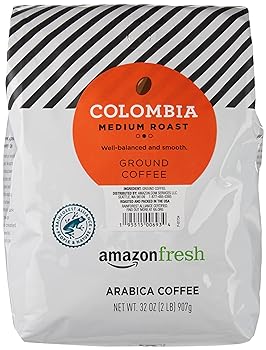
Kirkland Colombian Coffee
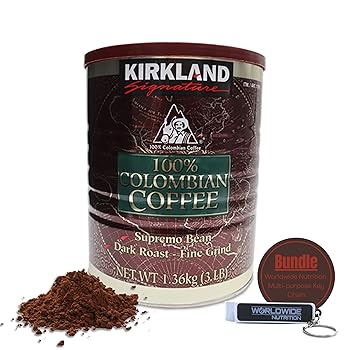
Kirkland Colombian Coffee is Costco’s house-brand Colombian roast. It is typically made from 100% Arabica beans grown in Colombia, which already tells you something about caffeine.
Arabica beans naturally contain less caffeine than Robusta beans. Most grocery store coffees in North America, including Kirkland Colombian, are Arabica based. That means the caffeine level tends to be moderate rather than extreme.
In practical terms, Kirkland Colombian Coffee sits right in the middle of the caffeine spectrum. It is strong enough to wake you up but not so aggressive that it feels like drinking rocket fuel.
Factors That Affect Caffeine in Your Cup
- The bag might be the same, but the cup you drink can vary wildly.
- Let’s walk through the biggest factors that change caffeine levels.
Bean Type
- Arabica beans contain roughly 1.2 to 1.5 percent caffeine by weight.
- Robusta beans can have almost double that amount.
Since Kirkland Colombian is Arabica, the caffeine level is fairly balanced. You will get a clean energy boost, but it is not the most intense coffee on the market.
In my experience, people switching from Robusta-heavy espresso blends often think Kirkland tastes smoother and slightly less stimulating.
Roast Level
- This part confuses a lot of people.
- Many assume dark roast equals more caffeine.
- The real difference is density.
- Light roast beans are denser.
Grind Size
- Grind size changes extraction.
- Finer grinds expose more coffee surface to water.
For example:
-
French press (coarse grind) extracts slower
-
Drip coffee (medium grind) extracts balanced caffeine
-
Espresso (fine grind) extracts quickly but in a small volume
I have noticed that when people grind Kirkland beans too fine for drip machines, the coffee tastes stronger and the caffeine hit feels heavier.
Brewing Method
- This is the biggest variable of all.
- The brewed coffee vs cold brew caffeine.
- Different methods extract caffeine differently.
Typical caffeine ranges
- Drip brewed coffee
- 95 to 120 mg caffeine
French press
- 90 to 120 mg caffeine
- Cold brew (8 oz)
- 120 to 160 mg caffeine depending on dilution
Cold brew concentrates caffeine during the long steeping process. If you drink it undiluted, the caffeine level can jump significantly.
Serving Size
- This is the part many people ignore.
- An “8 ounce cup” is the standard reference. But most mugs at home hold 12 to 16 ounces.
- That means your morning mug could easily contain 150 to 240 mg of caffeine without you realizing it.
Caffeine Content in Kirkland Colombian Coffee
For Kirkland Colombian Coffee caffeine, the typical range looks like this.
Standard brewed cup
95 to 120 mg caffeine
12 oz mug
140 to 180 mg caffeine
16 oz large mug
180 to 240 mg caffeine
8 oz cold brew
- 120 to 160 mg caffeine
- If someone drinks a 16 oz cold brew
From my own brewing experiments, Kirkland Colombian behaves almost exactly like other good Colombian Arabica coffees in this range. It is neither weak nor extremely high in caffeine.
Coffee Caffeine Comparison
To understand the coffee caffeine comparison, it helps to see where Kirkland coffee sits among common drinks.
Typical caffeine levels
Regular brewed coffee
95 to 120 mg per 8 oz
Kirkland Colombian Coffee
95 to 120 mg per 8 oz
Cold brew coffee
120 to 160 mg per 8 oz
60 to 75 mg per shot
Energy drinks
So when someone asks how much caffeine in Kirkland coffee, the honest answer is that it behaves like a normal medium-strength brewed coffee.
It is not unusually strong. But depending on how you brew it, it can absolutely deliver a serious caffeine kick.
Practical Tips to Adjust Your Caffeine Level
If you want to control caffeine from Kirkland Colombian Coffee, you have more power than you think.
Here are some tricks I use regularly.
Adjust the Coffee Dose
- Use fewer grounds.
- If you normally use two tablespoons per cup, try one and a half.
Dilute Cold Brew
Cold brew concentrate can be intense.
I often mix half cold brew and half water or milk. The taste stays smooth while cutting the caffeine almost in half.
Choose Smaller Cups
- This sounds obvious but it works.
- Switching from a 16 oz mug to a 10 oz mug
Brew Slightly Weaker Coffee
Most people use too much coffee in drip machines. Reducing the dose by 10 to 15 percent keeps flavor balanced and lowers caffeine.
Drink Earlier in the Day
- Caffeine stays in your body longer than people think. Half of it can still be active five to seven hours later.
- I try to avoid caffeine after mid afternoon if I want good sleep.
Health and Safety Considerations
Most healthy adults can safely consume about 400 mg of caffeine per day.
That equals roughly:
- 3 to 4 normal cups of brewed coffee
- But this varies a lot from person to person.
- Some people feel jittery at 150 mg. Others can drink multiple cups with no issue.
From experience, the warning signs of too much caffeine are easy to notice:
-
shaky hands
-
racing heart
-
anxiety
-
trouble sleeping
If you start feeling those, it usually means your intake crossed your personal limit.
Pregnant individuals and people with heart conditions are often advised to keep caffeine lower, usually around 200 mg per day or less. Always follow medical guidance in those situations.
You Might Be Interested In
- 10 Creative Nespresso Vertuo Carafe Hacks
- Cuisinart vs Ninja Coffee Maker
- How Many Watts Is Nespresso Essenza Mini?
- Does Nespresso Vertuoplus Take All Pods?
- What Are The Benefits Of Vertuo Plus?
Conclusion
Kirkland Colombian Coffee sits right in the middle of the coffee caffeine spectrum. A normal 8 ounce cup usually contains around 95 to 120 milligrams of caffeine, which is almost identical to many other Arabica coffees. The actual caffeine you drink depends heavily on how you brew it, how strong you make it, and how large your mug is.
In everyday use, I find Kirkland Colombian to be very predictable. It gives a steady caffeine boost without being overly aggressive. If you brew strong cold brew or pour oversized mugs, the caffeine can climb quickly. But with simple adjustments to brewing strength and cup size, you can easily control your caffeine intake while still enjoying the smooth Colombian flavor.
FAQs
How much caffeine is in Kirkland Colombian Coffee?
A typical 8 ounce cup of Kirkland Colombian Coffee usually contains around 95 to 120 milligrams of caffeine. That puts it right in the same range as most standard brewed coffees made from Arabica beans. In theory that sounds straightforward, but in real life the number can shift depending on how strong you brew the coffee. If you use extra grounds, a finer grind, or let the brew extract longer, the caffeine level in the cup can climb higher.
Another thing people overlook is cup size. Most home mugs hold far more than 8 ounces. A 12 ounce mug can easily deliver around 140 to 180 milligrams of caffeine, while a large 16 ounce cup might reach 200 milligrams or more. So when people ask how much caffeine in Kirkland coffee, the honest answer is that the brewing strength and mug size often matter more than the beans themselves.
Is Kirkland coffee stronger than other coffees?
In terms of caffeine, Kirkland coffee is not unusually strong. The Kirkland Signature coffee caffeine content is very similar to most medium roast Arabica coffees you would buy at a grocery store. If you brew it using the typical coffee-to-water ratio, the caffeine level will feel almost identical to many other Colombian or Latin American coffees.
Where people sometimes notice a stronger effect is in how the coffee is brewed. I have seen many people use a heavier dose of grounds when brewing Kirkland coffee because they like the bold flavor. That stronger brew can naturally raise the caffeine level in the cup. So the perception of strength often comes from brewing habits rather than the beans themselves.
Does cold brew Kirkland coffee have more caffeine?
Cold brew coffee often contains more caffeine than regular brewed coffee, especially when it is made as a concentrate. The long steeping process, which usually lasts between 12 and 24 hours, extracts a large amount of caffeine from the coffee grounds. If the cold brew is not diluted, the caffeine level can be noticeably higher than a standard drip coffee.
With Kirkland Colombian beans, I have found that cold brew can easily reach around 120 to 160 milligrams of caffeine per 8 ounces, sometimes even more depending on the recipe. Many people make the mistake of drinking cold brew concentrate straight from the fridge. When diluted properly with water, milk, or ice, the caffeine level becomes much closer to a regular cup of coffee.
How does Kirkland Colombian compare to espresso?
Espresso often feels stronger because the flavor is concentrated and intense. However, the actual caffeine content per serving is usually lower than a full cup of brewed coffee. A single espresso shot typically contains about 60 to 75 milligrams of caffeine, which is less than what you would get in a standard 8 ounce mug of brewed Kirkland Colombian coffee.
Where espresso catches up is when people drink multiple shots. Two shots in a latte or cappuccino can bring the caffeine close to or above what you would get from a regular cup of coffee. In everyday use, though, a full mug of brewed Kirkland coffee usually delivers more total caffeine than a single espresso shot.
Can I reduce caffeine in Kirkland Colombian Coffee?
Yes, and it is actually easier than most people think. The simplest way is to adjust how much coffee you use during brewing. If you normally use two tablespoons of coffee per cup of water, try reducing it slightly. Even a small reduction in the amount of grounds can lower the caffeine while still producing a balanced cup.
Another practical approach is to dilute stronger coffee drinks. Cold brew can be mixed with water, milk, or ice to soften both the flavor and the caffeine level. Some people also mix regular Kirkland beans with decaf beans to create a half-caffeine blend. That trick keeps the same flavor profile while cutting the caffeine almost in half.
2 Comments
Great post! I love how you’ve covered all the essential details about Kirkland Colombian Coffee. It’s so informative, especially for coffee lovers curious about its caffeine content and flavor. Appreciate the effort you put into breaking down the brewing process and the sourcing behind it!
Great post! I love how detailed and informative it is about Kirkland Colombian Coffee. It’s definitely a favorite for many, and your breakdown of its caffeine content and brewing methods is really helpful. Thanks for sharing such valuable insights!