


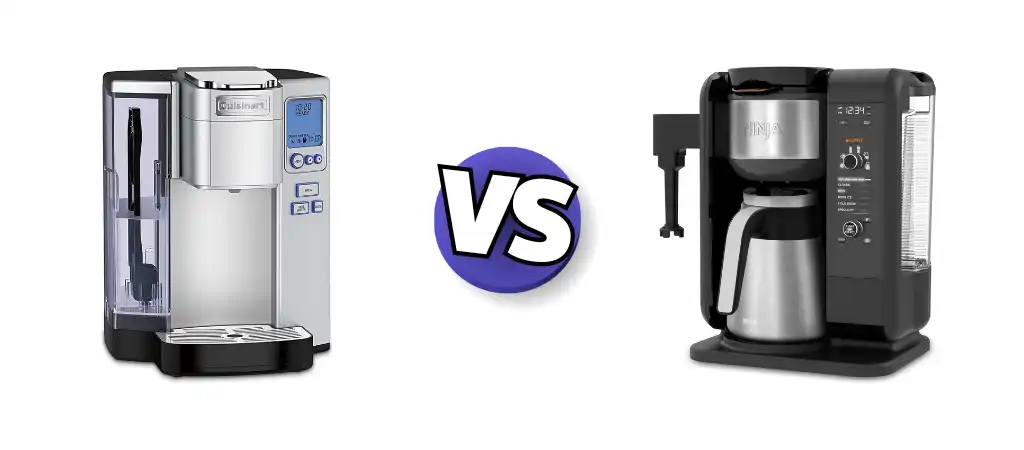
Choosing the right coffee maker is more than just picking a machine that looks good on your countertop. Two heavyweights in the home coffee world are Cuisinart and Ninja. Both brands have loyal followings, but they take very different approaches to brewing coffee.
From classic drip machines to multi-function specialty coffee makers, these machines promise convenience, flavor, and customization but how do they stack up in real life? Cuisinart vs Ninja Coffee Maker
In my experience, the difference isn’t just in the specs. It’s in how the machine actually brews, how easy it is to clean, and whether you can get the exact coffee strength and temperature you like.
A Cuisinart programmable coffee maker often nails consistency for traditional drip coffee fans, while Ninja specialty coffee makers lean heavily on versatility, letting you make everything from a single cup to a full carafe with adjustable brew strengths. By the end of this comparison, you’ll know which machine matches your coffee habits best in 2026.
Quick Verdict
If you want straightforward, reliable drip coffee with minimal fuss, Cuisinart is a solid choice. Machines like the Cuisinart DCC-3200 deliver consistently good coffee and come with user-friendly programmable features. You won’t find a lot of fancy tricks, but for classic coffee drinkers, that’s exactly the point.
Ninja machines, on the other hand, are all about flexibility. The Ninja CM401, for example, lets you brew everything from a single cup to a full carafe, with options like “Rich” and “Over Ice” brews. If you like experimenting with brew strength, cup size, and specialty drinks, Ninja gives you more control than most Cuisinart models. However, the trade-off is that Ninja machines have more buttons, which can feel overwhelming if all you want is a simple morning cup.
In short, Cuisinart wins on simplicity and reliability, while Ninja wins on versatility and customization. Your choice really comes down to how hands-on you want to be with your coffee.
Brand Overview
About Cuisinart
Cuisinart has been a household name for decades, known primarily for kitchen appliances that are sturdy, reliable, and easy to use. Their coffee makers are no exception. Most Cuisinart programmable coffee makers focus on the basics: they make drip coffee consistently, often with thermal carafe options to keep it hot for hours.
From my hands-on testing, Cuisinart machines tend to prioritize build quality and consistency over flashy features. The brewing temperature is stable, the timers work as expected, and you usually get even extraction across the carafe. There’s a reason their DCC series is so popular: it’s dependable, user-friendly, and has enough programmable features to suit most coffee drinkers.
Cuisinart is perfect if you like waking up to a pre-set pot of coffee and don’t want to fuss with multiple brew modes or specialty settings. Their machines rarely surprise you, which is exactly what you want in a machine that’s part of your daily routine.
About Ninja
Ninja has built its coffee reputation on versatility and innovation. While they started with blenders, their specialty coffee makers have become fan favorites for home baristas who like options. Machines like the Ninja CM401 or CE251 offer multiple brew sizes, brew strengths, and even iced coffee options, all in one unit.
From practical experience, Ninja machines are more hands-on. You can choose “Classic,” “Rich,” or “Over Ice” brews, making them ideal if your coffee habits change from morning to afternoon or you like cold coffee in summer.
However, this versatility comes with slightly steeper learning curves and more components to clean. Ninja’s design philosophy is about letting you experiment and find the perfect cup for any situation.
Key Differences at a Glance
| Feature | Cuisinart | Ninja |
|---|---|---|
| Brew Types | Standard drip, programmable | Specialty options, multiple brew sizes |
| Brew Strength Control | Limited | Extensive (Classic, Rich, Over Ice) |
| Carafe Options | Glass or thermal | Glass or thermal |
| Ease of Use | Simple, intuitive | More buttons, versatile |
| Price Range | $80–$200 | $90–$230 |
| Specialty Drinks | Rare | Possible with certain models |
Design and Build Quality
In the real world, a coffee maker’s design isn’t just about looks it’s about durability and usability. Cuisinart machines typically have a more traditional, boxy design with a sturdy plastic or stainless steel body. The buttons are straightforward, and the displays are easy to read.
Machines like the DCC-3200 feel solid on the counter, and even after months of daily use, I’ve found that knobs, carafes, and lids hold up well.
Ninja coffee makers have a sleeker, modern design with more emphasis on functionality. The CM401, for instance, has multiple buttons and settings, each clearly labeled, but the sheer number of options can feel a bit much at first glance.
Build quality is solid, with robust plastic and metal components, but some parts like the water reservoir lid or frother attachments require careful handling to avoid wear over time.
Both brands generally avoid cheap-feeling materials, but the Cuisinart leans conservative, while Ninja focuses on versatility and multi-functionality in its design.
Brewing Performance and Coffee Taste
Here’s where things get interesting. Cuisinart programmable coffee makers excel at producing a consistent, hot cup of coffee. In my experience, machines like the DCC-3200 maintain the ideal temperature, ensuring that the flavor is extracted evenly from start to finish.
The coffee is smooth, without bitterness, which is perfect for drip coffee purists. However, if you’re after a strong, espresso-like punch, Cuisinart might feel a little mild.
Ninja machines bring more options. The “Rich” setting extracts deeper flavors and a bolder taste, while the “Classic” mode is lighter and more traditional. The “Over Ice” setting dilutes coffee appropriately to avoid overly bitter iced drinks.
During testing, I noticed that Ninja machines sometimes take slightly longer to brew larger carafes, but the extra time is worth it if you want precise control over strength and flavor.
One thing most people overlook: cup size and carafe shape impact taste. Ninja’s smaller “single-serve” brews are excellent for personal cups, whereas Cuisinart tends to shine when making full carafes for a family or office. Both machines deliver good coffee, but Ninja allows more fine-tuning for different tastes.
Brewing Options and Customization
Cuisinart machines usually stick to drip coffee basics, though most models include programmable timers, brew strength settings (regular vs bold), and auto-shutoff features. For everyday use, these are enough. You don’t get fancy “over ice” or “rich” modes, but that simplicity is a feature, not a flaw. You know what to expect every morning.
Ninja machines shine in this category. You can select multiple cup sizes from a single cup to a full 10–12 cup carafe, adjust brew strength from Classic to Rich, and even choose specialized modes like Over Ice or Specialty. I’ve found this extremely useful when my morning coffee differs from my afternoon iced latte. Ninja’s flexibility is unmatched for home coffee enthusiasts who like variety, though it does mean more buttons and a slightly longer learning curve.
Customization also extends to temperature and brew strength. Ninja lets you tweak every variable, whereas Cuisinart keeps things simple with two or three presets. For a person who enjoys experimenting with coffee flavors, Ninja is more rewarding.
Capacity and Carafe Options
Cuisinart machines typically offer 10–12 cup capacities, with glass or thermal carafes. Thermal carafes are excellent for keeping coffee hot without a hot plate, which I personally prefer because it avoids the burnt taste from constant warming. Glass carafes are standard and allow you to watch your coffee level, but you need to pour carefully to avoid spills.
Ninja coffee makers also have similar capacities, usually 10–12 cups, but some models include single-serve pods or smaller brew options. The versatility is handy if you live alone or like alternating between full pots and personal cups. Ninja’s carafes are generally durable and come in glass or thermal versions, though some models require careful handling to prevent drips from the pour spout.
Ease of Use
Cuisinart machines are straightforward. Fill water, add coffee, set the timer or brew strength, and press start. Buttons are intuitive, and the learning curve is almost nonexistent. Even my less tech-savvy friends can operate a DCC-3200 without reading the manual.
Ninja machines require a bit more attention. With multiple brew sizes, strengths, and modes, you’ll likely need to read the manual at first. That said, once you’re familiar, the extra functionality becomes second nature. Personally, I appreciate the flexibility, but I can see how someone who wants a simple “set and forget” machine might find it slightly complicated.
Cleaning and Maintenance
Cuisinart machines are easy to clean. Most parts like the filter basket, carafe, and water reservoir are removable and dishwasher-safe. Regular descaling is straightforward, and the simplicity of the machine means fewer nooks for coffee residue to hide.
Ninja coffee makers have more parts water reservoirs, frother attachments, and multiple baskets. Cleaning takes a bit longer, and you have to pay attention to instructions to avoid damaging sensors or components. Descaling is straightforward but requires more diligence. Overall, Ninja machines reward attention, while Cuisinart rewards simplicity.
Price and Value
Cuisinart coffee makers generally cost $80–$200, depending on features like thermal carafes or programmable settings. For that price, you get reliable performance, consistent coffee, and minimal maintenance hassle.
Ninja machines are slightly higher in price, around $90–$230, reflecting their added versatility and specialty brewing options. You’re paying for customization and multiple brew modes. In my experience, if you use all the features regularly, Ninja offers excellent value. If not, Cuisinart might give you more bang for your buck.
Pros and Cons
Cuisinart Pros
-
Simple and reliable drip coffee
-
Excellent thermal carafe options
-
Easy to clean and maintain
-
Consistent brewing temperature and taste
Cuisinart Cons
-
Limited customization and specialty options
-
Fewer brew strength settings
-
Less suitable for iced coffee or single-serve cups
Ninja Pros
-
Highly versatile, multiple brew sizes and strengths
-
Specialty options like Over Ice or Rich brew
-
Single-serve and full carafe options
-
Stronger coffee extraction possible
Ninja Cons
-
More buttons and learning curve
-
More parts to clean and maintain
-
Slightly higher price point
Who Should Buy Cuisinart?
Cuisinart is ideal for people who value simplicity and consistency. If you enjoy classic drip coffee and want a machine that reliably produces hot, smooth coffee with minimal fuss, Cuisinart is your friend. It’s perfect for busy mornings, offices, or anyone who doesn’t want to fiddle with multiple buttons or brew modes.
Who Should Buy Ninja?
Ninja is for coffee lovers who like variety and control. If you want options for different cup sizes, brew strengths, or iced coffee, Ninja machines let you experiment.
They’re perfect for households with multiple coffee drinkers or anyone who wants a more hands-on brewing experience with adjustable flavor intensity.
Best Models from Each Brand
For Cuisinart, the DCC-3200 is a standout. It’s programmable, reliable, and comes with a thermal carafe to keep coffee hot for hours. Other solid choices include the Cuisinart DCC-1200 and DCC-3500, which offer slightly fewer features but maintain excellent build quality and consistent brewing.
For Ninja, the CM401 Specialty Coffee Maker is extremely popular. It covers single-serve, full carafe, and multiple brew strengths, plus Over Ice options. The CE251 is another favorite, offering programmable settings and thermal carafe capabilities. Both brands have machines for different budgets, but these models are tried-and-true in real kitchens.
You Might Be Interested In
- Nespresso Vertuo Vs Original Line: 7 Key Differences
- Does Nespresso Vertuoplus Take All Pods?
- Who Makes Kirkland Pacific Bold Coffee?
- How Long Does a Nespresso Vertuo Machine Last?
- Does Vertuo plus turn off?
Conclusion
If you want a reliable, no-fuss drip coffee machine that consistently delivers good results, Cuisinart is hard to beat. It’s simple, dependable, and doesn’t require any guesswork, making it ideal for traditional coffee drinkers.
Ninja, however, wins for versatility. If you enjoy experimenting with coffee strength, cup size, and specialty brews, the Ninja CM401 or similar models give you options that Cuisinart simply doesn’t. Ultimately, your choice comes down to whether you prioritize simplicity or customization in your daily coffee routine.
FAQs about Cuisinart vs Ninja Coffee Maker
Is Ninja better than Cuisinart?
Whether Ninja is better than Cuisinart really depends on what you need from a coffee maker. In my experience, Ninja excels when you want variety and control. You can brew anything from a single cup to a full carafe, adjust strength settings, or even make iced coffee. For households with different coffee preferences or people who like experimenting with flavors, Ninja is more flexible.
Cuisinart, on the other hand, shines in simplicity and reliability. If your priority is a consistent, hot cup of drip coffee with minimal fuss, Cuisinart usually wins. You won’t get a dozen brew modes, but you get a dependable, well-built machine that works every time. So it’s not about one being universally better; it’s about matching the machine to your coffee habits.
Which coffee maker makes stronger coffee, Ninja or Cuisinart?
From hands-on experience, Ninja machines can produce stronger coffee than most Cuisinart models. That’s thanks to features like the “Rich” or “Specialty” brew modes, which extract more flavor and caffeine per cup. You also have more control over cup size and brew strength, so it’s easier to dial in a stronger brew if that’s your preference.
Cuisinart machines, particularly the programmable drip models, tend to be milder. You can get a bolder cup by using the “Bold” setting or adjusting your coffee grind, but the difference isn’t as dramatic as with Ninja. So if you’re a fan of punchy, robust coffee, Ninja usually edges out Cuisinart.
Do Ninja coffee makers last as long as Cuisinart machines?
Yes, Ninja machines can last as long as Cuisinart, but there’s a catch. Ninja machines have more parts and attachments, which means they require careful maintenance to prevent wear. Regular cleaning, descaling, and proper handling of removable parts will keep them running smoothly for years. I’ve had Ninja machines that lasted five-plus years without issues when treated well.
Cuisinart machines are simpler in design, so there are fewer points of potential failure. This sometimes gives them a slight edge in longevity, especially for users who want a set-and-forget machine. Both brands are durable, but Ninja demands a little more attention to reach its full lifespan.
Can both machines brew a single cup of coffee?
Most Ninja machines are designed with single-serve brewing in mind, making them convenient for solo cups. You can select a single cup size and even adjust the strength, which is great if you don’t want a whole carafe. I often use this feature in the mornings when I just want one strong cup before heading out.
Cuisinart machines are more traditional and focus on full carafes, though some models do have small-batch or pod-compatible options. If single-serve convenience is a priority, Ninja is typically more user-friendly. That said, Cuisinart can still handle solo cups if you’re willing to adjust the coffee-to-water ratio manually.
Which coffee maker is easier to clean?
Cuisinart is generally easier to clean due to its simple, straightforward design. The filter basket, water reservoir, and carafe are all removable and often dishwasher-safe. Regular descaling is simple, and fewer parts mean less chance for coffee residue to hide. In my experience, this makes Cuisinart ideal for people who want good coffee without spending extra time on upkeep.
Ninja machines have more components water reservoirs, frother attachments, and multiple baskets that require careful cleaning. Descaling is straightforward, but you do need to pay attention to sensors and removable parts to avoid damage. So while Ninja rewards effort with versatility, Cuisinart wins for simplicity and low-maintenance cleaning.