


I’ve owned and used a lot of Hamilton Beach coffee makers over the years basic drip machines, single-serve pod brewers, and a couple of FlexBrew two-way models. I’ve overflowed counters, brewed coffee so weak it looked like tea, scorched pots, clogged machines with fine grounds, and helped friends fix theirs when they swore the machine was “broken.”
Here’s the truth: Hamilton Beach coffee makers are simple machines, but they’re easy to use wrong. Most problems come from using the wrong method for the model you own, eyeballing water, skipping cleaning, or assuming the machine will “figure it out.”
Once you understand how these machines actually behave in a real kitchen, they’re reliable and forgiving.
Let’s walk through it the way I explain it to someone standing at the counter with coffee grounds in one hand and mild frustration in the other.
Why Hamilton Beach Coffee Makers Confuse People
Hamilton Beach makes a lot of coffee makers.
- They look similar.
- They use similar buttons.
- But they behave very differently.
A drip carafe machine doesn’t work like a single-serve.
A single-serve doesn’t forgive sloppy water measurements.
FlexBrew models combine both and that’s where people really get tripped up.
Most “my coffee tastes bad” or “it overflowed everywhere” stories start with one simple mistake: following instructions for the wrong type of machine.
Once you know which machine you have and how it expects water and coffee to be added, everything clicks.
Identify Your Hamilton Beach Coffee Maker Type
Before you brew anything, figure this out. Seriously.
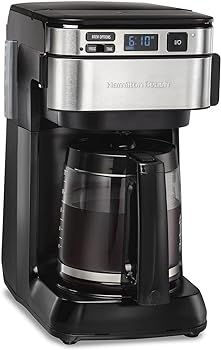
A. Drip Carafe Model
You have this if:
-
It brews into a glass or thermal carafe
-
It uses a swing-out or lift-up basket
-
It makes 4–12 cups at a time
This is the classic countertop coffee maker.
B. Single-Serve Pod Model
You have this if:
-
It brews directly into a mug
-
It uses K-Cup-style pods or a small mesh basket
-
There’s no carafe involved
These are very sensitive to water levels.
C. FlexBrew / 2-Way Model
You have this if:
-
One side has a carafe
-
The other side brews into a single mug
-
There are separate water reservoirs or markings
This is where people mess up the most.
Each side works independently.
What works on one side will absolutely not work on the other.
Before First Use
I don’t care if it’s brand new.
I never brew coffee first.
What I actually do:
-
Rinse the carafe, filter basket, and pod holder with warm water
-
Fill the reservoir with plain water
-
Run a full brew cycle with no coffee
Why?
Because:
-
Manufacturing residue tastes awful
-
Plastic and rubber smells are real
-
The first brew almost always tastes “off” if you skip this
Skipping this step is one of the biggest reasons people think their machine makes bad coffee.
How to Use a Hamilton Beach Drip Coffee Maker
This is where most people think they know what they’re doing and then wonder why the coffee is weak or bitter.
Step-by-Step (Real World Version)
-
Add water to the reservoir
-
Use the carafe markings, not your mug
-
Don’t overfill “just a little extra”
-
-
Insert a filter
-
Paper filters = cleaner taste
-
Reusable filters = stronger coffee, more oils
-
-
Add coffee grounds
-
Start with 1 tablespoon per cup
-
Hamilton Beach “cups” are 5 oz, not a big mug
-
-
Close the basket fully
-
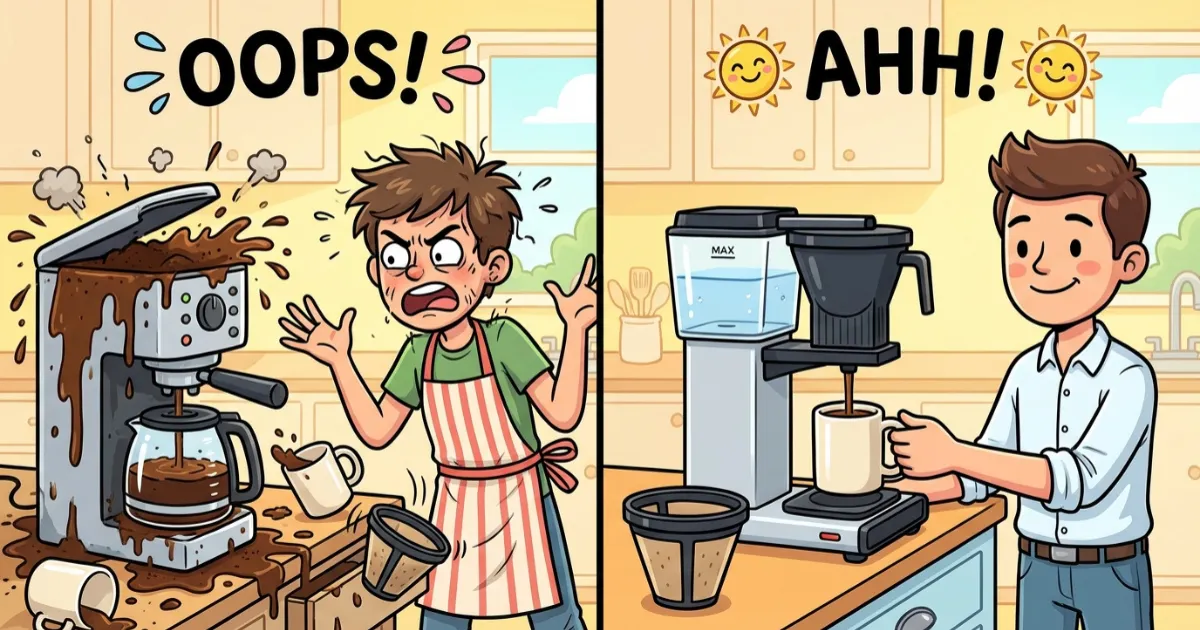
Half-closed baskets cause overflows (I’ve seen it dozens of times)
-
-
Place the carafe correctly
-
If it’s not centered, the drip stop won’t open
-
-
Press Brew
Coffee Amounts That Actually Work
-
8 “cups” → ~8 tablespoons
-
12 “cups” → ~12–14 tablespoons if you like it stronger
Most people under-dose coffee and blame the machine.
Grind Size Matters
-
Medium grind is ideal
-
Too fine = slow brew, bitterness, overflow
-
Too coarse = weak, watery coffee
Pre-ground “drip” coffee works fine. Espresso grind does not.
Common Drip Mistakes I’ve Personally Seen
-
Overfilling the basket
-
Using espresso grind
-
Not seating the carafe fully
-
Forgetting yesterday’s wet grounds in the basket
How to Use a Hamilton Beach Single-Serve or FlexBrew
Single-serve brewing is less forgiving. Precision matters here.
Brewing With Pods
-
Lift the lid
-
Insert pod (foil up)
-
Place mug before adding water
-
Fill water using the mug itself
-
Press Brew
Always measure water with the mug you’re using.
This prevents overflow better than any line or marking.
Brewing With Ground Coffee
-
Use the mesh basket
-
Add 1 to 2 tablespoons max
-
Don’t tamp it down
-
Fill water carefully
-
Brew
Packing grounds too tightly is a guaranteed mess.
What Usually Causes Single-Serve Problems
-
Too much water
-
Grounds packed too tight
-
Fine grind clogging the exit
-
Forgetting to remove last pod
FlexBrew machines don’t warn you. They just overflow.
Optional Features (Auto Brew, Bold, Programming)
Auto Brew
Great if:
-
You prep water and coffee the night before
-
You don’t mind slightly less aroma
Terrible if:
-
You forget water
-
You forget coffee
-
You don’t clean regularly
Bold Setting
In practice:
-
Slows the brew slightly
-
Extracts more flavor
-
Can increase bitterness with dark roasts
I use it with medium roasts only.
Programming
Nice convenience.
Doesn’t improve coffee quality.
How to Make Better-Tasting Coffee
Here’s what actually matters, in order:
-
Fresh coffee
-
Old coffee tastes flat no matter the machine
-
-
Correct grind
-
This fixes more problems than anything else
-
-
Clean machine
-
Old oils ruin flavor fast
-
-
Decent water
-
If your tap water tastes bad, your coffee will too
-
What doesn’t matter much:
-
Fancy beans
-
Special filters
-
Expensive accessories
Cleaning & Descaling
Daily / After Brewing
-
Rinse basket or pod holder
-
Empty used grounds
-
Leave lid open to dry
Weekly
-
Wash carafe and removable parts with dish soap
-
Wipe down the brew head
Descaling (Every 1–3 Months)
-
Mix 50% white vinegar / 50% water
-
Run a full brew cycle
-
Let sit 15 minutes
-
Run plain water twice
Warning Signs You’re Overdue
-
Slower brewing
-
Gurgling sounds
-
Sour or metallic taste
-
Machine stopping mid-brew
Ignore descaling long enough and the machine will fail.
Troubleshooting (Real Problems, Real Fixes)
Overflowing
Causes:
-
Too much water
-
Fine grind
-
Basket not seated
Fix:
-
Reduce water
-
Use medium grind
-
Reinsert basket properly
Weak Coffee
Causes:
-
Too little coffee
-
Coarse grind
-
Old beans
Fix:
-
Add more grounds
-
Adjust grind
Bitter Coffee
Causes:
-
Too fine grind
-
Over-extraction
-
Dirty machine
Fix:
-
Coarser grind
-
Clean thoroughly
Slow Brewing
Cause:
-
Mineral buildup
Fix:
-
Descale
Stopping Mid-Brew
Cause:
-
Overheating or clog
Fix:
-
Unplug, clean, descale
Safety Tips That Actually Matter
-
Steam burns are real don’t open mid-brew
-
Keep cords away from water
-
Never clean while plugged in
-
Don’t move the machine when hot
-
Place it on a level surface (this prevents weird dripping issues)
You Might Be Interested In
- How to Use a Small Battery Operated Milk Frother
- How To Use The Ninja Dual Brew Coffee Maker?
- How To Make Coffee Without A Coffee Maker?
- How to Clean Gourmia Coffee Maker?
- How To Use Bunn Commercial Coffee Maker?
Final Thought
Hamilton Beach coffee makers don’t need babying but they do need basic respect for how they’re designed to work. Measure water properly. Use the right grind. Clean regularly. Do those things, and they’ll quietly make good coffee for years.
Author Bio
Ali Raza is a home appliance writer with years of hands-on experience using, maintaining, and troubleshooting everyday kitchen machines, especially coffee makers. He has personally used multiple Hamilton Beach drip, single-serve, and FlexBrew coffee makers in real home settings, learning how they actually behave through daily use, cleaning mistakes, overflow incidents, descaling problems, and trial-and-error brewing.
How I Test Hamilton Beach Coffee Makers
I test Hamilton Beach coffee makers the same way most people actually use them: in a real kitchen, over weeks and months, not just one afternoon. I brew coffee daily using both pre-ground coffee and freshly ground beans, try different water levels, and intentionally push the machines the way users do—slightly too much water, different grind sizes, paper vs reusable filters, and both light and dark roasts.
I pay close attention to common failure points like overflowing, weak coffee, slow brewing, temperature consistency, and how the machine behaves when it hasn’t been cleaned perfectly. I also evaluate how easy the machine is to clean, how quickly mineral buildup affects performance, and whether features like “Bold” or auto-brew actually change the result. Most of what I write comes from fixing mistakes—my own and other people’s—and seeing what reliably works long-term, not just what the manual claims should work.
FAQ’s
How much coffee should I use?
This is the most common place people go wrong, and it’s usually because Hamilton Beach measures “cups” differently than we do. Their machines count one cup as about 5 ounces, not a full mug. In real terms, a good starting point is one level tablespoon of ground coffee per 5-ounce cup of water. If you’re filling the carafe to the 8-cup line, that’s roughly 8 tablespoons of coffee. For a full 12-cup pot, most people are happier with 12 to 14 tablespoons, especially if they like a stronger cup.
If your coffee tastes weak, don’t immediately blame the machine. In my experience, it’s almost always under-dosing coffee or using grounds that are too coarse. You can safely adjust by adding a little more coffee per brew until it tastes right. Hamilton Beach machines can handle slightly heavier dosing just fine as long as the grind isn’t too fine and the basket isn’t overfilled.
Why is it overflowing?
Overflowing almost always comes down to one of three things: too much water, too much coffee, or grounds that are too fine. These machines don’t have much tolerance for “just a little extra.” If the filter basket fills faster than water can drip through, it has nowhere to go except over the edge and onto your counter. I’ve seen this happen more times than I can count, especially when people use espresso-fine grounds in a drip machine.
Another very common cause is the filter basket or carafe not being seated correctly. If the basket isn’t fully locked in place, or the carafe isn’t centered under the drip stop, the flow backs up and spills out. Before assuming something is broken, take everything out, reseat it carefully, reduce the coffee slightly, and try again. Nine times out of ten, that fixes it.
Can I use hot water?
No and this one surprises a lot of people. Hamilton Beach coffee makers are designed to heat cold water gradually as it moves through the machine. Pouring hot water into the reservoir can confuse the temperature sensors, cause uneven extraction, or even trigger the machine to shut off early. I’ve also seen it lead to weaker coffee because the brew cycle shortens.
Using cold, fresh water gives the machine the time it needs to heat properly and extract flavor evenly. If you’re trying to speed things up, hot water won’t help and can actually make the coffee worse. Let the machine do its job the way it was designed to.
How often should I descale?
In real-world use, every one to three months is a good rule of thumb, depending on your water. If you live somewhere with hard water, you’ll want to descale closer to once a month. If your water is softer, you can stretch it out a bit longer. The machine won’t remind you, but it will show signs slower brewing, strange noises, or coffee that suddenly tastes flat or sour.
I’ve seen plenty of Hamilton Beach machines that people thought were “dying,” when all they needed was a simple vinegar descale. Mineral buildup restricts water flow and messes with temperature, which affects both taste and performance. Regular descaling is the difference between a machine that lasts two years and one that lasts five or more.
Why does my coffee taste bad?
Most bad-tasting coffee isn’t the machine’s fault. It’s usually old coffee, the wrong grind size, dirty internal parts, or mineral buildup from skipped descaling. Coffee oils stick around longer than people realize, and once they go stale, every brew after that picks up those off flavors. Even good beans can’t overcome a dirty brew path.
Another big factor is grind size. Too fine and the coffee extracts too much, turning bitter. Too coarse and it tastes thin and hollow. Combine that with tap water that already tastes off, and the result is disappointing no matter what brand of coffee maker you’re using. Clean the machine, use fresh grounds, match the grind to the brew style, and most “bad coffee” problems disappear fast.